


In a world dominated by sleek designs and high-tech gadgets, retro game controllers are like a warm hug from your childhood. They bring back memories of pixelated adventures and late-night gaming marathons, reminding us that sometimes, the classics are just too good to let go. Who wouldn’t want to relive those glory days while gripping a controller that feels like an old friend?
Overview of Retro Game Controllers
Retro game controllers serve as a bridge to the gaming past, providing a tactile experience that modern controllers often lack. Many gamers cherish these devices for their unique designs and functionality that reflect the era they represent. Specific models, such as the NES and Sega Genesis controllers, have become iconic in the gaming community.
Numerous enthusiasts appreciate the straightforward layouts of retro controllers. Simple button configurations facilitate easy gameplay, allowing players to immerse themselves in classic titles without the complexity found in today’s hardware. Classic consoles often come equipped with a limited number of buttons, creating a focused gaming experience.
Cultural significance accompanies these controllers as well. They evoke nostalgia for many individuals who grew up in the 1980s and 1990s, rekindling memories of playing with friends and family. Remakes and third-party products aim to capture the essence of these controllers, catering to both nostalgic gamers and a new audience.
Compatibility plays an important role in the appeal of retro controllers. Many modern systems offer options for connecting these devices, enabling portability between vintage and contemporary gaming platforms. Adapters often help facilitate this connection.
Lastly, the collectible nature of retro controllers adds excitement for collectors. Limited edition releases and collaborations increase their value, prompting enthusiasts to seek out these rare items. Collecting these nostalgic devices has turned into a hobby for many passionate gamers, ensuring that the legacy of retro game controllers lives on.
Popular Retro Game Controllers
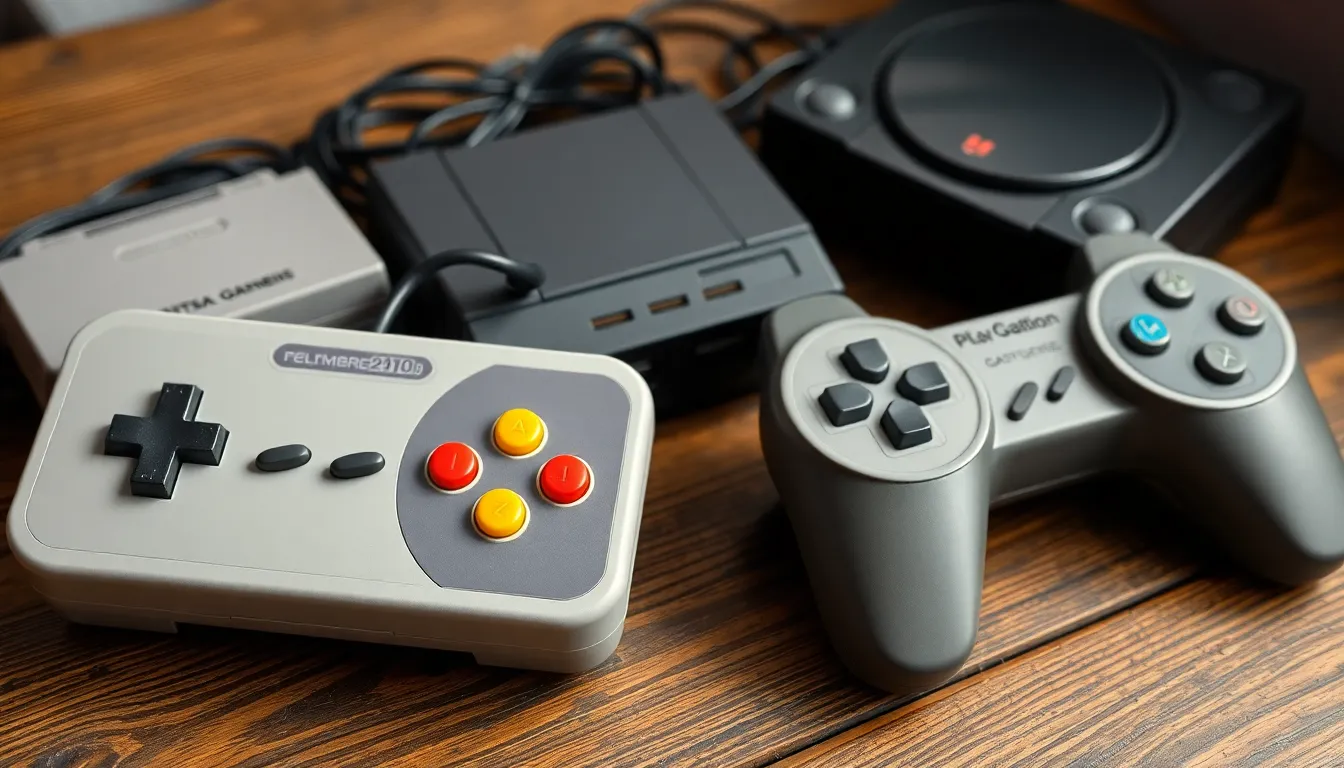
Retro game controllers maintain a strong following among gamers, showcasing unique designs and functionality that stand the test of time. Iconic models often surface in discussions about gaming nostalgia.
Classic NES Controller
The Classic NES controller stands as a representation of early console gaming. Characterized by its rectangular shape and simple button layout, it provides easy access to features like the A and B buttons, along with the directional pad. Many gamers remember its lightweight feel, which made long gaming sessions enjoyable. Although 8-bit graphics seem dated now, the NES controller remains compatible with various modern systems, preserving its relevance. Collectors cherish this controller, considering it a vital piece of gaming history that continues to inspire new designs.
Sega Genesis Controller
Sega Genesis controllers dominate discussions about retro gaming. Recognized for its innovative six-button layout, it allowed players to engage more complex gameplay mechanics in titles such as Street Fighter II and Mortal Kombat. The distinctive design features a curved shape, providing a comfortable grip during extended sessions. Gamers appreciate the responsiveness of the buttons, which enhance their overall experience. Compatibility with various emulators keeps the Sega Genesis controller in play for both old and new fans alike. Limited edition variants, often adorned with unique colors, attract collectors who seek to preserve this piece of console history.
PlayStation One Controller
The PlayStation One controller played a significant role in shaping 3D gaming. Featuring analog sticks and a more ergonomic design, it helped establish the standard for controllers in subsequent PlayStation consoles. Its distinctive button layout, including the iconic triangle, circle, cross, and square, promoted an intuitive gaming experience. Players often recall the robust construction and responsive buttons, which increased enjoyment across numerous genres. As it remains compatible with various emulators, the PlayStation One controller invites new generations to experience classic titles. Its historical significance and growing collector interest solidify its status in gaming culture.
Modern Adaptations of Retro Game Controllers
Modern adaptations bring vintage gaming experiences to contemporary players. These developments enhance the gaming environment while retaining nostalgic elements.
Wireless Options
Wireless technology transforms the way players engage with retro game controllers. Bluetooth connectivity allows for flexibility and ease of movement, removing the need for cumbersome cables. Various companies produce wireless versions of iconic controllers, such as the NES and Sega Genesis. These innovations maintain original designs while providing modern functionality. Players enjoy the freedom to sit back and immerse themselves in classic games without worrying about tripping over wires.
Enhanced Features
Enhanced features redefine classic controllers for today’s gamers. Some adaptations incorporate motion controls and programmable buttons, making gameplay more versatile. Others include improved ergonomic designs that cater to extended gaming sessions, reducing fatigue. Features like adjustable sensitivity levels enhance precision and control during gameplay. Users also appreciate compatibility with various modern consoles and PCs, allowing for seamless integration into diverse gaming setups. These enhancements bridge the gap between nostalgia and contemporary gaming advancements.
Benefits of Using Retro Game Controllers
Nostalgia plays a significant role in the appeal of retro game controllers. These controllers invoke memories of classic gaming, allowing players to reconnect with their childhood experiences. Familiarity fosters comfort and enhances enjoyment during gameplay.
Tactile feedback from retro controllers contributes to an immersive experience. The button layouts of iconic models like the NES and Sega Genesis promote instinctive play, making it easier for players to navigate games. Ergonomic designs support extended gaming sessions without resulting in discomfort.
Compatibility with modern gaming systems adds to their versatility. Many retro controllers seamlessly connect with contemporary consoles, making it simple for players to enjoy both classic and new titles. Wireless technology improves accessibility, allowing gamers to play without the inconvenience of tangled cords.
Collectibility represents another appealing aspect. Limited edition releases often attract collectors, who seek to own a piece of gaming history. These unique variants stimulate excitement within the gaming community, promoting a sense of tradition and camaraderie among enthusiasts.
Enhanced features elevate the retro gaming experience. Consumers can now find wireless adaptations of classic controllers that retain original aesthetics while providing modern conveniences. Programmable buttons and motion controls improve precision, making older games more enjoyable for today’s players.
Adaptations of retro game controllers ensure they remain relevant. By bridging the gap between nostalgia and current gaming advancements, these devices captivate both long-time fans and newcomers alike. Embracing retro controllers allows players to experience the rich history of gaming in a modern context.
Retro game controllers continue to hold a special place in the hearts of gamers. Their unique designs and tactile feedback transport players back to simpler times while enhancing the enjoyment of both classic and modern games. The ability to connect these controllers to current systems allows for a seamless blend of nostalgia and innovation.
As the gaming landscape evolves, the appeal of retro controllers remains strong. Their collectible nature and limited edition releases foster a sense of community among enthusiasts. Whether for casual play or serious collecting, these controllers offer a timeless experience that keeps the spirit of classic gaming alive.

