


The story of human evolution is a fascinating tapestry woven with the threads of different species. Among these, Neanderthals, Homo sapiens, and Denisovans stand out as key players in our ancestral narrative. Each group has unique traits and adaptations, shaping the way they interacted with their environments and each other.
As researchers dive deeper into the genetic and archaeological evidence, the distinctions and connections between these ancient hominins become clearer. Did they coexist? How did they influence one another? Understanding these relationships not only sheds light on human history but also helps us grasp what it means to be human today. Join the exploration of these remarkable beings and their legacy that still resonates in our DNA.
Overview of Human Evolution
Human evolution encompasses a complex interplay among several hominin species, primarily Neanderthals, Homo sapiens, and Denisovans.
- Neanderthals: Neanderthals, classified as Homo neanderthalensis, thrived in Europe and parts of Asia. They lived approximately 400,000 to 40,000 years ago. Neanderthals developed robust physiques and adaptations for colder climates, including larger nasal cavities and stocky bodies. They exhibited cultural behaviors, such as tool-making and burial rites.
- Homo sapiens: Recognized as modern humans, Homo sapiens emerged around 300,000 years ago in Africa. They possess advanced cognitive capabilities, characterized by complex language, art, and social structures. Their adaptability allowed them to occupy diverse environments across the globe.
- Denisovans: Denisovans, a lesser-known group, existed around 300,000 to 50,000 years ago, mainly in Southeast Asia. Genetic evidence indicates they interbred with both Neanderthals and Homo sapiens. Denisovans contributed to contemporary human genetics, particularly among populations in Asia and Oceania.
Interactions among these species led to shared traits and cultural exchanges, shaping the evolutionary path of modern humans. Genetic studies show that non-African populations harbor Neanderthal DNA, while some Melanesians carry Denisovan genetic markers. These findings illustrate the complexity and fluidity of human ancestry, redefining the understanding of what it means to be human today.
Neanderthal
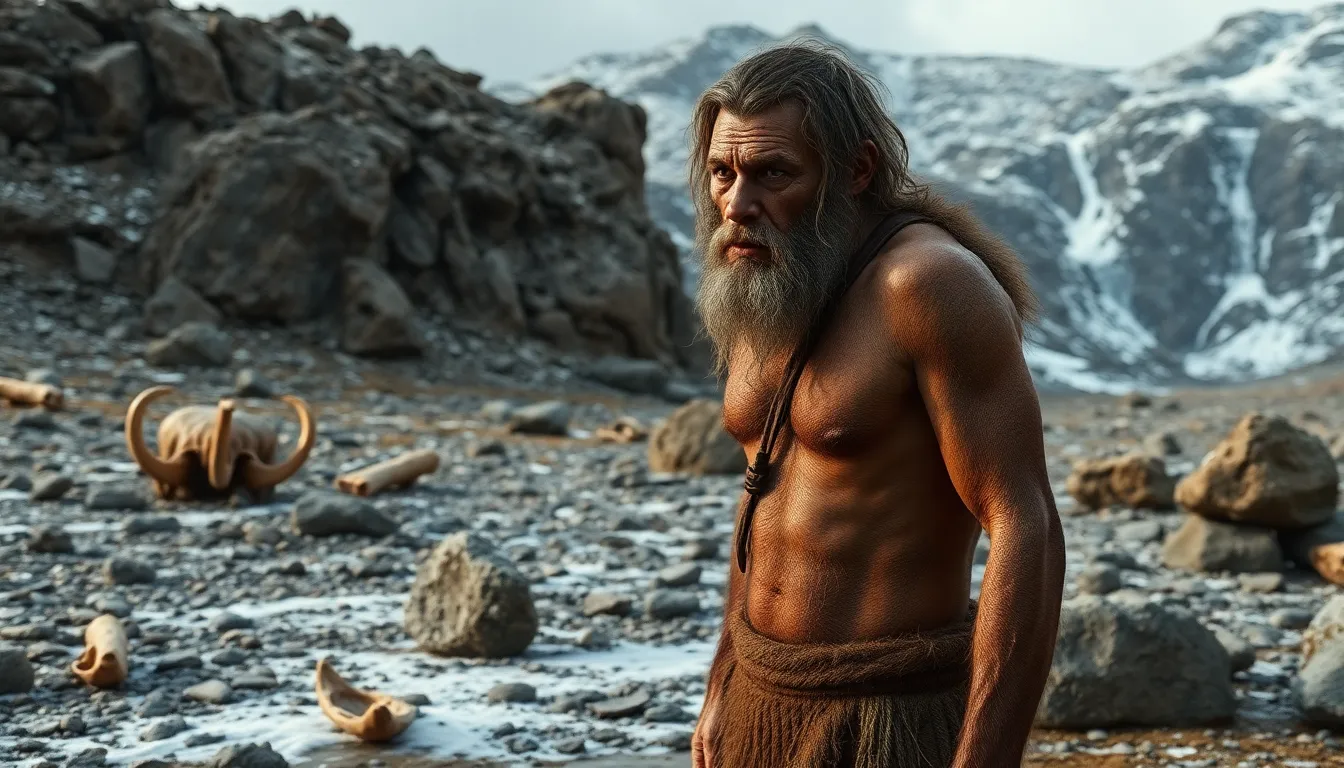
Neanderthals, classified as Homo neanderthalensis, significantly influenced the narrative of human evolution. Their existence spanned from approximately 400,000 to 40,000 years ago, primarily in Europe and parts of Asia.
Origin and Geography
Neanderthals emerged in Europe and migrated into western Asia. Their origin traces back to the Middle Paleolithic period. As the climate shifted, they adapted to colder environments, showcasing resilience in various habitats. Fossils reveal their presence across sites in countries such as Germany, France, and Russia, indicating a broad geographical range.
Physical Characteristics
Neanderthals exhibited distinct physical traits that set them apart from Homo sapiens. They typically had robust bodies, characterized by a stocky build, wide pelvises, and strong limb bones. Their skulls featured prominent brow ridges and a large nose, adaptations to cold climates. Dental analysis indicates they had a diet rich in proteins. Evidence suggests they averaged 5 feet 6 inches in height, with some individuals being shorter or taller.
Cultural Aspects
Culturally, Neanderthals displayed advanced behaviors. They crafted sophisticated tools from stone and bone, demonstrating skill and innovation. Archaeological finds indicate they created art, such as carvings and potentially early forms of body decoration. Burial practices reflect a sense of ritualistic behavior, implying a grasp of life and death concepts. Additionally, evidence of social cooperation presents a picture of communal living, vital for survival in harsh environments.
Homo Sapien
Homo sapiens, or modern humans, emerged approximately 300,000 years ago in Africa, marking a significant milestone in human evolution. They are distinguished by their advanced cognitive capabilities and adaptive social structures.
Origin and Geography
Homo sapiens originated in Africa and later migrated to various parts of the world. Archaeological evidence indicates that early populations spread into Europe and Asia around 60,000 to 70,000 years ago. Fossil findings, such as those at Omo Valley in Ethiopia and Jebel Irhoud in Morocco, help map the geographic distribution of early human populations. These migrations resulted in a diverse range of cultures and physical adaptations.
Physical Characteristics
Homo sapiens exhibit several distinct physical characteristics. They typically feature a lighter build compared to Neanderthals, with a narrower ribcage, elongated limbs, and a smaller brow ridge. Average height varies, often around 5 feet 5 inches to 6 feet tall. The cranial capacity averages about 1,400 cubic centimeters, reflecting advanced brain development. The face is flatter, with a smaller jaw and less pronounced teeth, adapting to their omnivorous diet.
Cultural Aspects
Cultural practices among Homo sapiens demonstrate significant complexity. They developed advanced tools, including blades, points, and harpoons, showcasing improved craftsmanship. Language skills enabled intricate storytelling and social bonding, fostering collaborative societies. Art emerged prominently in the form of cave paintings, sculptures, and jewelry, reflecting cognitive and aesthetic expression. Furthermore, rituals surrounding death, such as burial practices, illustrate a developed sense of spirituality and social cohesion, underscoring their uniqueness in the hominin lineage.
Denisovan
Denisovans represent a significant branch in the human evolutionary tree, known primarily through genetic analysis and fossil evidence. Their existence spans approximately 300,000 to 50,000 years ago in Southeast Asia, marking them as crucial players in the story of human ancestry.
Origin and Geography
Denisovans emerged in regions that include parts of Siberia and Southeast Asia. Fossils discovered in the Denisova Cave in the Altai Mountains provide critical insights, revealing their habitat alongside Neanderthals and early modern humans. Migration patterns indicate interactions among these hominins, suggesting shared environments that facilitated both competition and cooperation.
Physical Characteristics
Denisovans exhibited unique physical traits inferred from limited fossil evidence. Genetic studies suggest they possessed robust skeletal structures and adaptations suited for various climates. While specific height estimates remain elusive, their genetic relatives, like Neanderthals, likely reflect similar varied physical dimensions, indicating significant adaptability to environmental changes.
Cultural Aspects
Culturally, Denisovans remain less understood due to limited archaeological findings. However, genetic data reveals interbreeding with both Neanderthals and Homo sapiens, influencing modern human genetic diversity, particularly in Asia and Oceania. While direct evidence of tool-making or artistic endeavors remains sparse, the potential for cultural sophistication exists, paralleling that of contemporaneous hominins. Their interactions with other species highlight the dynamic nature of ancient societies and shared innovations.
Comparison of Neanderthal, Homo Sapien, and Denisovan
Neanderthals, Homo sapiens, and Denisovans share common ancestry yet exhibit distinct genetic and behavioral traits. Understanding these differences enhances insights into human evolution.
Genetic Differences
Neanderthals, classified as Homo neanderthalensis, possessed unique genetic markers differentiating them from Homo sapiens. Approximately 99.7% of Neanderthal DNA resembles that of modern humans, yet specific alleles linked with traits such as skin pigmentation and metabolism show differences. Homo sapiens carry genetic traits adapted to diverse environments, contributing to their survival in various climates. Denisovans, on the other hand, demonstrate distinct genetic characteristics inferred from limited fossil records. Genetic studies indicate that Denisovans share a common ancestor with Neanderthals, but exhibit variation in genes associated with high-altitude adaptation, suggesting adaptation to mountainous regions in Southeast Asia.
Interaction and Interbreeding
Neanderthals and Homo sapiens interacted extensively, as evidenced by fossil findings and genetic studies. Genetic data indicates that around 1% to 2% of the DNA of modern non-African populations originates from Neanderthals, reflecting interbreeding events that solidified shared traits. Denisovans interbred with both Neanderthals and Homo sapiens, contributing to the genetic diversity found in modern Asian and Oceanic populations. Their interactions suggest a complex web of relationships among these species, characterized by shared technologies, cultural practices, and adaptive strategies. This interbreeding highlights the fluid nature of human ancestry, emphasizing cooperation and adaptation across ancient populations.
The intricate relationships among Neanderthals, Homo sapiens, and Denisovans reveal a fascinating narrative of human evolution. Their shared ancestry and interactions shaped the genetic landscape of modern humans. Each species contributed unique traits and adaptations that influenced survival and cultural development.
Understanding these connections not only enriches knowledge of human history but also highlights the importance of genetic diversity. As research continues to uncover more about these ancient hominins, the story of human evolution becomes increasingly complex and compelling. The legacy of Neanderthals, Homo sapiens, and Denisovans lives on in the DNA of contemporary populations, reminding us of our shared past and interconnectedness.

